
Barre Chords Without Tears
Barre chords don't have to hurt. Use elbow weight and the leverage of the ʻukulele instead of grip strength, and the thumb can rest.

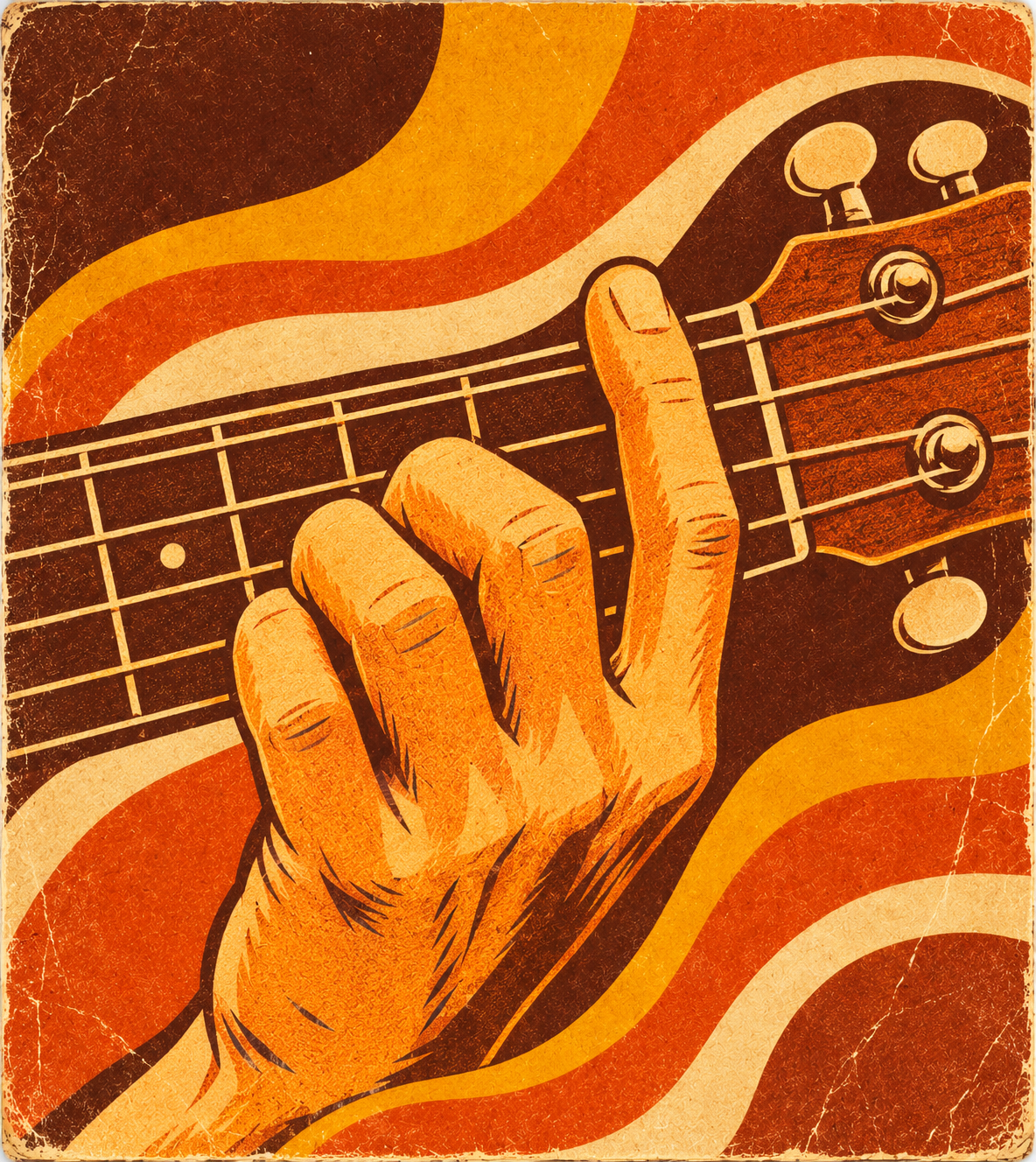
There’s something I see all the time. A student gets to their first barre chord, clamps down with the thumb, and suddenly everything hurts — the wrist, the hand, sometimes even the shoulder. Then I hear it: “Dr. Trey, I can’t do barre chords.” Usually, it’s not that they can’t. It’s that they’re using grip strength for a job that was never meant to be done with grip strength.
The Mistake Almost Everyone Makes
When people first learn barre chords, they treat the ʻukulele like something they have to squeeze — thumb behind the neck, fingers pressing hard, whole hand locked. That works for a few seconds. Then the hand gets tired, the barre gets buzzy, and the student decides barre chords are “advanced” or “not for them.”
Here’s the reframe I give my students at Kapena School of Music and Four Strings ʻUkulele Studio: you don’t need to squeeze the neck. You need to use weight and leverage.
Use the Weight of Your Elbow
Instead of pinching the fretboard between your thumb and your barre finger, let your arm help. Think about hanging a little of your arm’s weight into the barre — not collapsing, not forcing, just resting enough pressure through the finger so the strings meet the frets cleanly. Your elbow and forearm become part of the chord, and your hand stops doing all the work alone. A lot of students are surprised the first time they try this: the chord clears up, and their hand feels lighter, not heavier.
Use the Leverage of the Instrument
The other half of the trick is the ʻukulele itself. If you’re holding the instrument against your body the right way, the body of the ʻukulele can become the other side of the “press.” You’re not fighting the neck with pure finger power — you’re letting the instrument and your arm set up a small lever, just enough contact that the barre can sit instead of slam.
This is why posture matters more than people think. If the ʻukulele is floating out in front of you, every barre becomes a strength contest. If it’s stable against you, barre chords get quieter, calmer, and easier.
Yes — You Can Barre Almost Without the Thumb
I tell students this carefully, because it sounds impossible the first time: it is possible to play barre chords almost effortlessly without relying on the thumb as a clamp. The thumb can rest, guide, and balance. It does not have to crush. When the elbow weight and the instrument’s leverage are doing their jobs, the thumb becomes optional support — not the engine of the chord. That’s the moment barre chords stop feeling like a punishment and start feeling like a shape.
How I Coach It in Class
When a student is struggling, we don’t just “press harder.” We slow down and check: Is the barre finger flat enough, or is it collapsing into a soft curve? Is the elbow helping, or is all the force coming from the hand? Is the ʻukulele stable against the body, or is it drifting? Can we lighten the thumb and still hear a clean chord?
Usually, one of those four is the whole problem. And once it’s fixed, the student realizes something important: barre chords aren’t about being strong. They’re about being efficient.
A Small Practice Challenge
Pick one barre shape you already know — even a partial barre — and play it three ways: first with a hard thumb squeeze (the old habit), then with elbow weight and a lighter thumb, then with as little thumb as you can while still sounding clean. Don’t chase perfection. Chase the feeling of less effort for the same clear sound. If your hand feels calmer on version two or three, you’re on the right path.
Final Thought
I don’t want my students to white-knuckle their way through music. I want them to feel that the ʻukulele can work with them. Barre chords don’t have to hurt, don’t have to scare you, and definitely don’t have to depend on grip strength alone. Use the weight of the elbow. Use the leverage of the instrument. Let the thumb rest when it can. Then play.
Happy strumming — Dr. Trey