

Don’t Let Your Fingers Forget: Summer Travel Tips for ʻUkulele Players

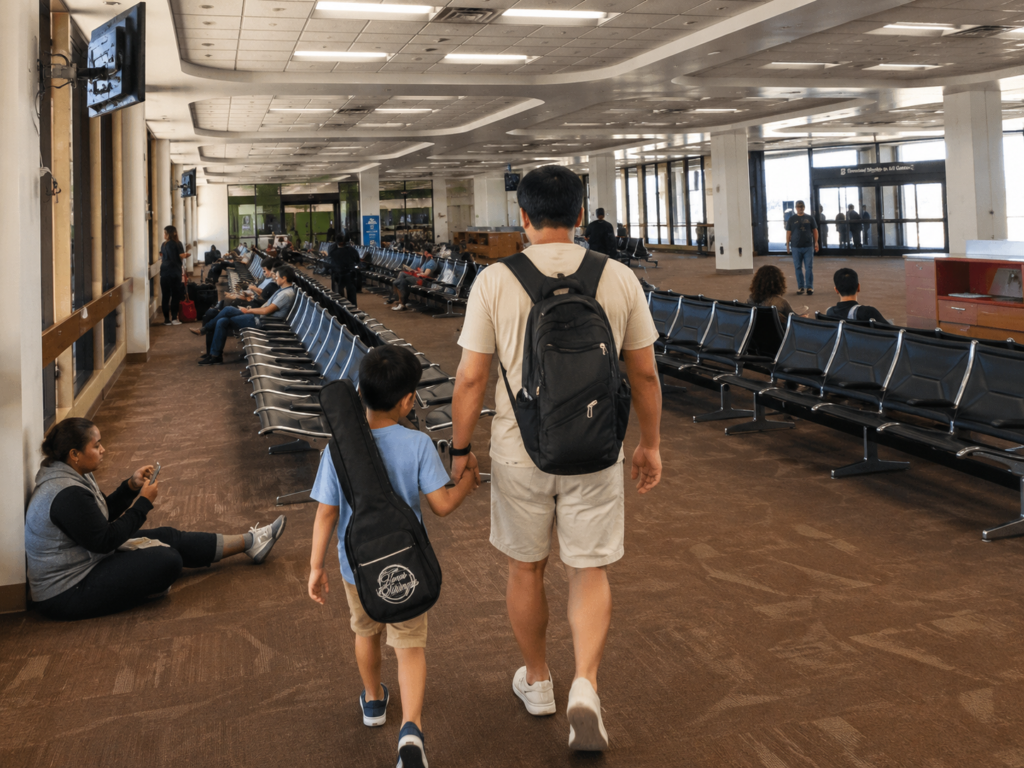
As summer arrives, many of our students will be taking a well-deserved break from classes while traveling with their families. Some of you will be visiting ʻohana on the mainland, some will be exploring other islands or states, and some may even be heading overseas.
While we’ll definitely miss seeing you in class, I wanted to share a few tips to help you keep your skills sharp and your ʻukulele safe while you’re away. Most of our summer travelers will be returning in August, and a little effort now can make a huge difference when it’s time to jump back into class.
Your Fingers Have Memories
One thing I’ve noticed over the years is that students who stop playing completely during the summer often spend several weeks rebuilding their finger strength and muscle memory when they return.
The good news is that it doesn’t take much practice to prevent that from happening.
Even five or ten minutes a day can keep your fingers in shape.
You don’t need to work on difficult songs. Instead, try:
• Playing through songs you already know
• Practicing your chord changes
• Working on strumming patterns (you can do this while listening to music even without an ʻukulele. Just strum the rhythm on your belly as though your is ʻukulele there. )
• Reviewing chord names
Think of it like exercising. If you don’t move for two months, your muscles get rusty. The same thing happens with your fingers. Most strumming exercises including rasqueado strumming doesnʻt require an instrument to familiarize yourself with the motions.
Should You Travel With Your ʻUkulele?
Absolutely.
One of the best things about the ʻukulele is that it’s incredibly portable. Unlike larger instruments, most ʻukuleles are small enough to travel almost anywhere.
In fact, most soprano, concert, and tenor ʻukuleles fit comfortably inside airline overhead bins.
If you’re flying, my recommendation is simple:
Carry your ʻukulele onto the plane whenever possible.
The safest place for your instrument is with you.
Can Airlines Allow Your ʻUkulele as a Carry-On?
Yes.
Federal regulations require airlines to allow small musical instruments in the cabin when they can be safely stored in an overhead compartment or under a seat and there is available space when you board.
That means most ʻukuleles can legally travel as carry-on items.
However, there is one catch:
If the overhead bins are already full, the airline may require you to gate-check your instrument.
That’s why boarding early can make a huge difference.
If You Must Check Your ʻUkulele
Sometimes there simply isn’t enough room in the cabin.
If your instrument must travel underneath the aircraft, take a few precautions:
• Use a hard-shell case whenever possible
• Add extra padding around the headstock and neck
• Remove loose items from inside the case
• Loosen the strings slightly before flying
While modern aircraft cargo compartments are pressurized, temperature and humidity changes can still affect wooden instruments. Slightly loosening the strings reduces unnecessary tension during travel.
Don’t completely slack the strings—just back them off a little.
The Bigger Danger: Heat
Believe it or not, a hot car is often more dangerous to your ʻukulele than an airplane.
Never leave your instrument:
• Inside a parked vehicle
• In direct sunlight
• Near heaters or hot windows
• In a garage or storage area that gets extremely hot
Excessive heat can warp wood, weaken glue joints, crack finishes, and permanently damage an instrument.
If you’re comfortable sitting in the environment, your ʻukulele probably will be too.
A Summer Challenge From Dr. Trey
Here’s a fun challenge for everyone traveling this summer.
Take a photo of yourself with your ʻukulele somewhere interesting.
Maybe it’s:
• At the beach
• On a mountain
• At a national park
• In another state
• In another country
• At a famous landmark
When classes resume in August, I’d love to see where your ʻukulele traveled during the summer. Have you taken the ʻukulele somewhere its never been before?
What I Hope You’ll Do Before Returning
When you come back in August, I’d love for you to:
• Know the chords you’ve already learned
• Be able to play your showcase songs
• Keep your fingers comfortable with basic strumming
• Spend a little time making music each week
Remember, you don’t need to practice for an hour every day. A few minutes here and there can keep your skills alive and make your return to class much easier.
Most importantly, have fun.
Make memories with your family. Explore new places. Meet new people. And if your ʻukulele comes along for the ride, even better.
We’ll miss you while you’re away and can’t wait to welcome everyone back in August.
Safe travels and happy strumming!