
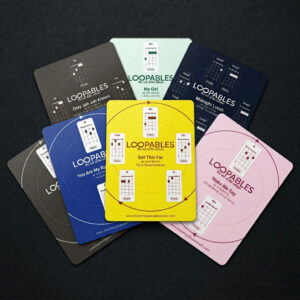
Loopables: The Art Of The Return

Bringing the Backyard Jam Back

Over the past few days, I’ve been quietly releasing something new on Instagram and TikTok called Loopables.
Soon, you’ll begin seeing them here on the blog as well.
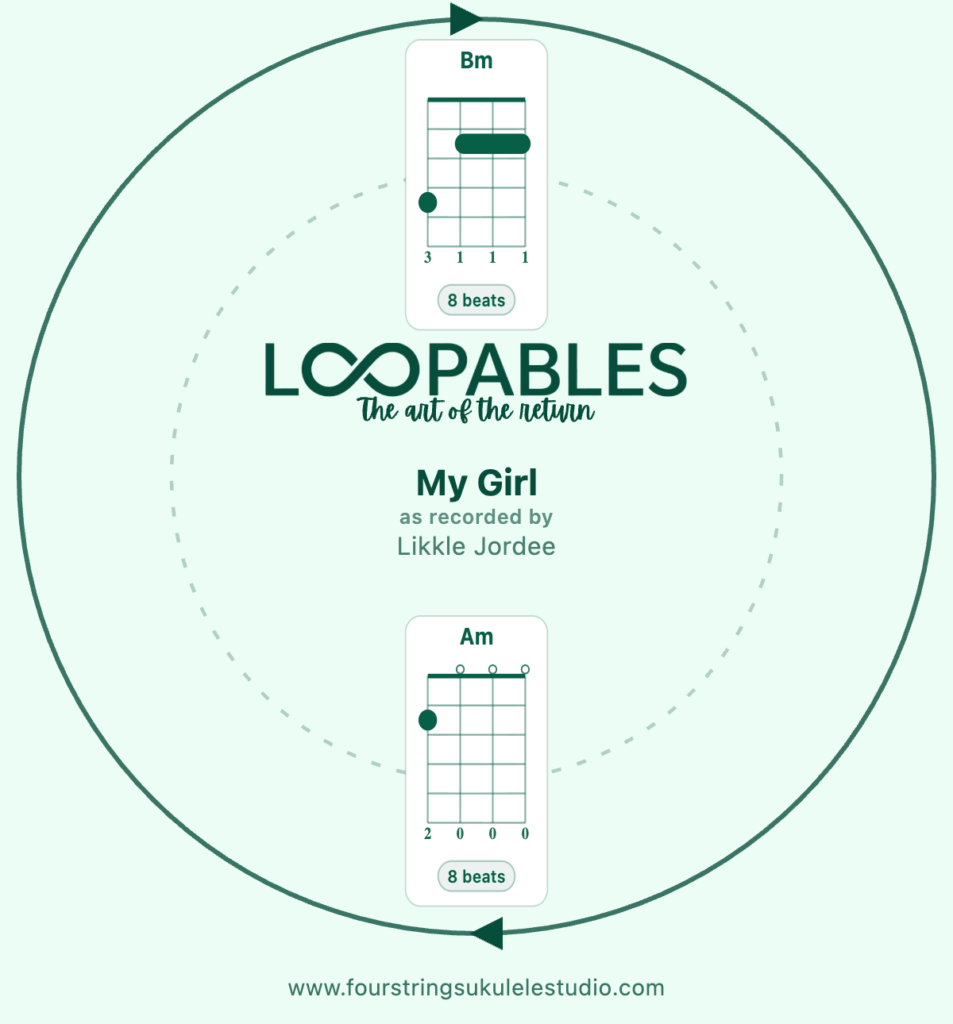
Loopables are songs I’ve found where the same chord progression carries the feel of nearly the entire song. Once you learn the cycle, you can stay inside the groove and play through the song naturally as the progression keeps coming back around.
The idea is simple: instead of overwhelming players with giant arrangements, the song is reduced to its repeating foundation so people can focus on groove, feel, timing, and confidence.
The Backyard Jam Tradition
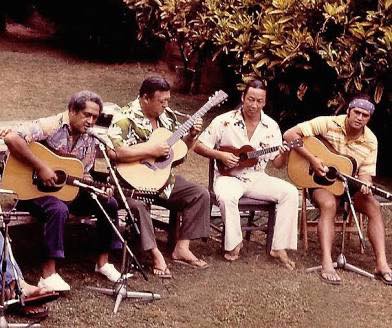
Many of you know that I learned from the legendary Peter Moon, and he learned from the legendary Gabby “Pops” Pahinui.
Did you know neither of them really taught in the traditional way with tabs, charts, or giant packets of paper?
When I would go to Peter’s house in Mānoa to learn from him, there was never a piece of paper in sight. There was usually a lot of food, though. Peter loved spicy chicken from Popeyes and Salt Meat Watercress from ʻOno Hawaiian Foods on Kapahulu Ave. The lessons felt less like formal instruction and more like being invited into somebody’s musical world.
We didn’t have phones with cameras back then, so we couldn’t simply videotape the lesson and review it later. And when I would stop to try and write something down, Peter would sometimes get impatient with me.
Not because he didn’t care — but because the music wasn’t supposed to live on the paper first. It was supposed to live in your ears, your hands, and your instincts.
Back in the days of the backyard jam, music was more of a feeling. It was a vibe. Your ear and your gut would begin recognizing when the change was coming. Over time, you started understanding the emotional colors of the chords and the natural pull from one sound to another.
Loopables is not trying to replace musicianship or deep learning. In many ways, it is trying to bring people back to one of the oldest and most natural ways humans learn music:
- repetition
- listening
- feel
- pattern recognition
- and shared musical experience
Instead of staring at giant walls of information, the player begins living inside the cycle. The loop repeats. The hands begin remembering. The ear starts predicting the next movement. The groove starts feeling natural.
Three Loopables to Try
A few chords. A groove. A cycle. A return.
And for this post, I wanted to include three Loopables for you to try yourself:
Bad Boys
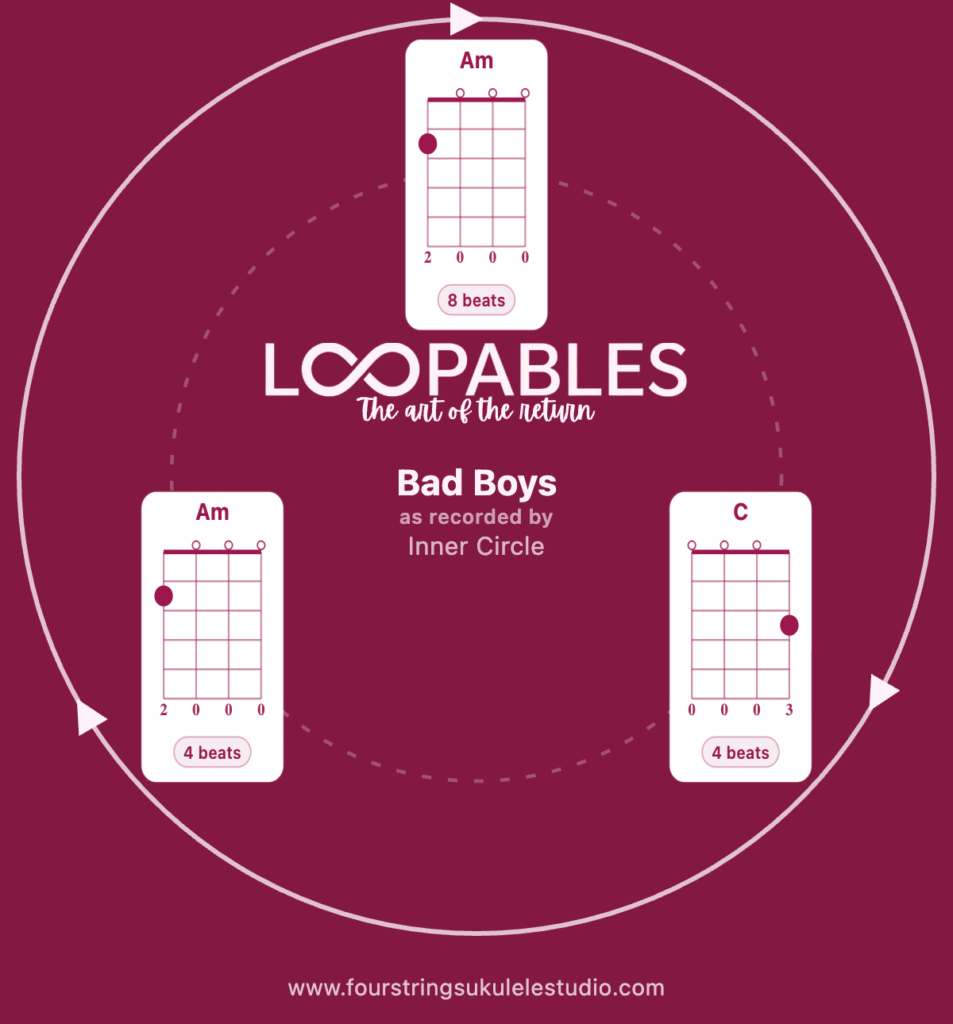
Hawaiʻi ’78
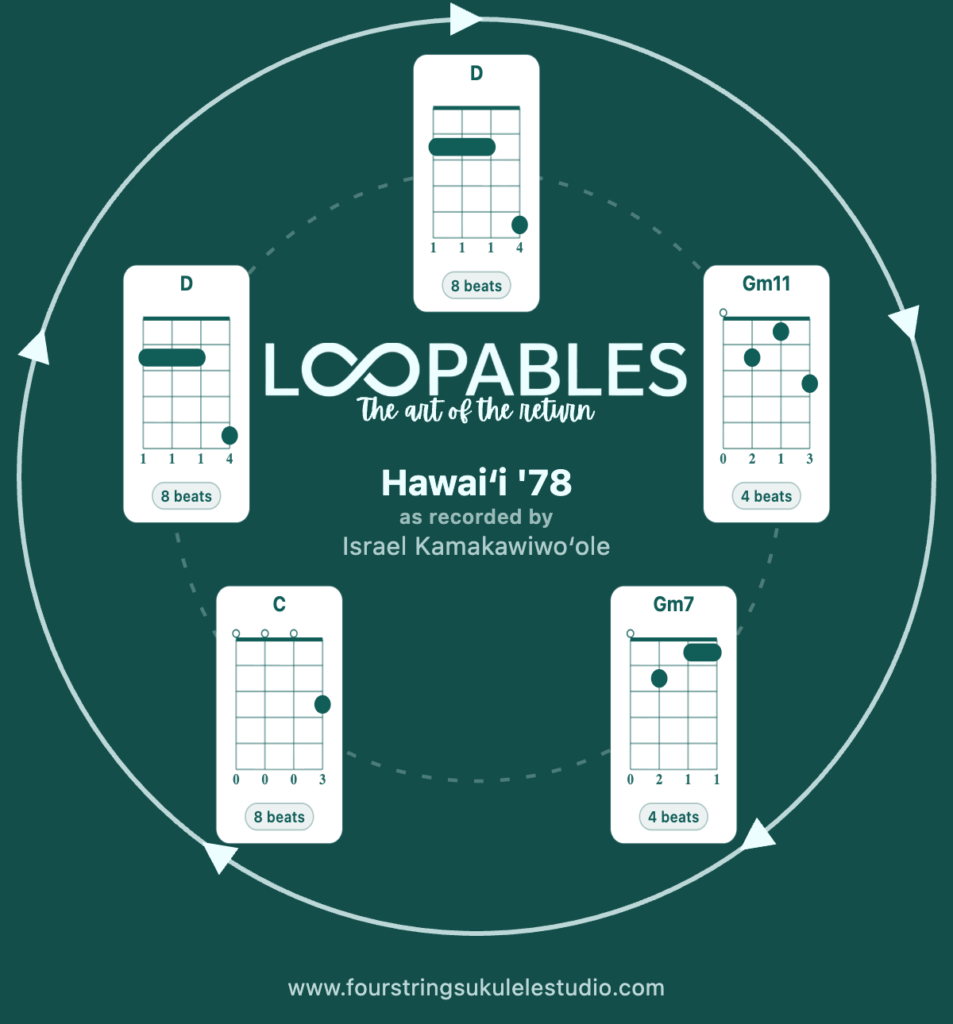
My Girl
Why the ʻUkulele Works So Well
The ʻukulele is uniquely suited for this.
Often described as one of the easiest instruments in the world to learn, the ʻukulele gives beginners one of the fastest paths to making real music. With only four strings, approachable chord shapes, forgiving nylon strings, and countless songs built around repeating loops and patterns, new players can begin sounding musical surprisingly quickly.
And that matters.
Research in education and psychology consistently shows that people learn better when they experience early success. Beginners are often trying to process finger placement, rhythm, chord changes, timing, strumming, listening, and visual information all at once. Educational researchers sometimes refer to this as cognitive load — the amount of mental effort required to process information.
Why the Loop Works
Loopables attempts to reduce that overload by giving players something their brain can comfortably hold onto: a repeating cycle.
The circular layout is intentional. Traditional sheet music often feels linear:
start → survive → finish
But a Loopable behaves more like a backyard jam:
play → return → repeat
There is no obvious failure point. If a player misses something, the cycle comes back around again. By the time the player gets to the hardest part of the loop, they’re back to the beginning again — and guess what? You already played that before, so of course you can do it again.
The focus shifts away from perfection and toward groove, repetition, and comfort.
In many ways, Loopables is less about teaching songs and more about teaching confidence.
Loopables is not meant to replace traditional music education. It is meant to create an inviting doorway into it.
The Real Goal
At its heart, Loopables is about contribution.
The ʻukulele has always been a communal instrument. It brings people together. It lowers barriers between strangers. It invites participation instead of perfection.
If Loopables helps even one person dust off the ʻukulele and start jamming again, or helps someone realize:
“Wait… maybe I actually can play music.”
then it is doing exactly what it was designed to do.
And perhaps that is the real power of simplicity.
And one more thing… if anybody knows where the new go-to spot for great Hawaiian food is these days, let me know in the comments. I’m still missing those Salt Meat Watercress runs to ʻOno Hawaiian Foods on Kapahulu. 😄